- Ningbo Dongning Tools Co.,Ltd
- Professional Chinese Tools manufacturer on automotive speciality tools,bearing puller&heavy truck tools
- Address
- No.6 Falan Rd,Hengjie Town,Ningbo City,Zhejiang,China
- Phone
- +86-574-87216625
- info@nbdntools.com

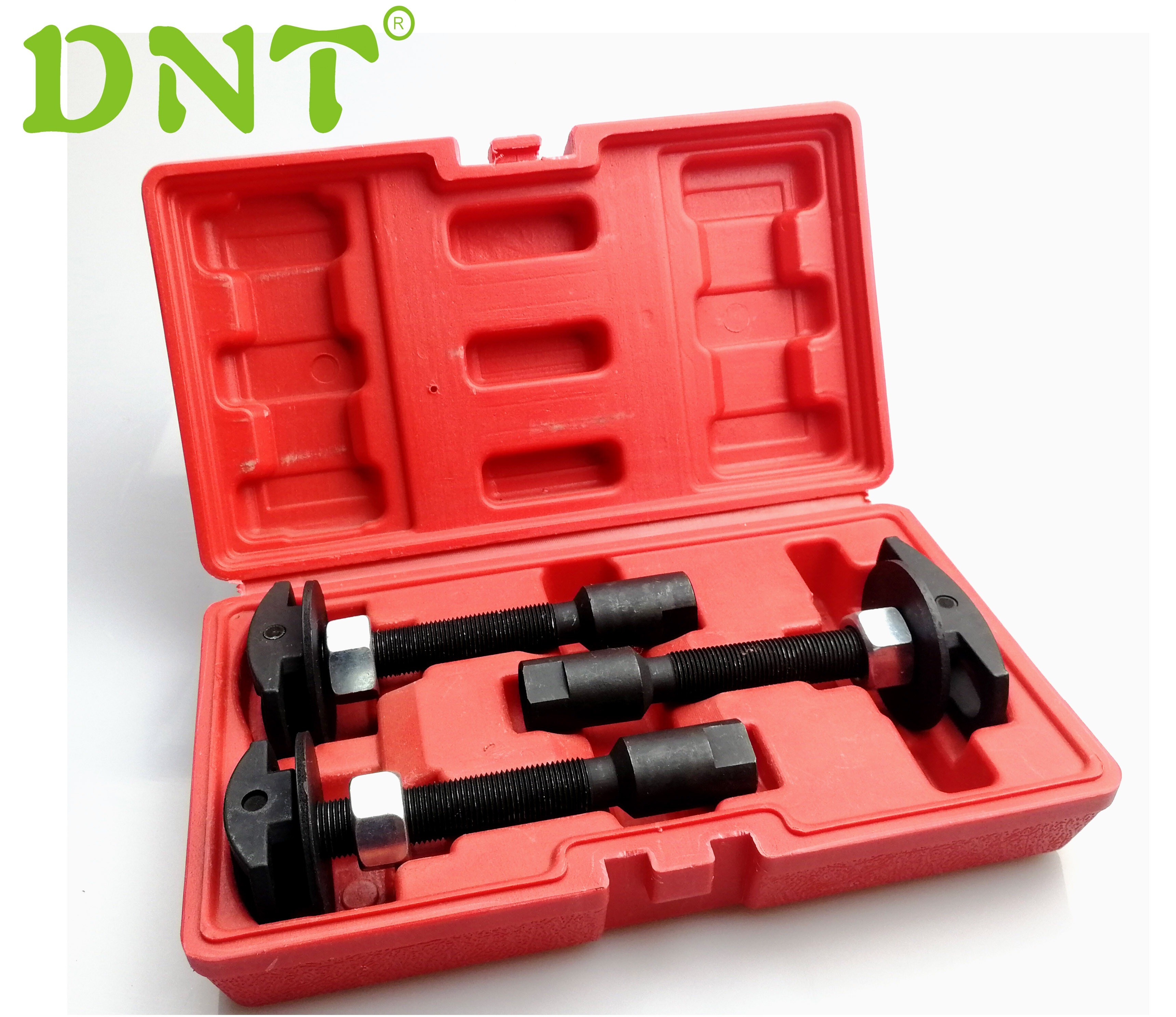
Removing rear axle bearings can be one of the most frustrating automotive tasks — especially when bearings are rusted, seized, or firmly press-fitted onto the axle shaft. A dedicated rear axle bearing puller is a powerful tool for this job, but even the right tool can encounter issues during use. In this guide, we’ll share practical troubleshooting tips and expert advice to help you overcome common challenges when working with a rear axle bearing puller.
At DNT Tools, we design professional automotive tools — including bearing pullers and slide hammer kits — to help both mechanics and DIY enthusiasts perform axle and bearing removal with confidence. Our tools are built for durability, precision, and long-lasting service, making tough jobs easier and safer.
One of the most frequent issues when using a rear axle bearing puller is that the bearing simply won’t budge. This can happen even when using slide hammer attachments with the puller set.
Possible Causes & Solutions:
1. Insufficient Force or Improper Technique
If the bearing isn’t releasing, it might be due to inconsistent or weak impact force from the slide hammer.
🔹 Apply steady, full-length strikes with the slide hammer rather than light taps.
2. Incorrect Adapter Fit
An improper adapter size or wrong bearing puller jaw can fail to grip the bearing properly, wasting effort.
🔹 Verify that the puller adapters match the bearing’s size exactly before attempting extraction.
3. Components Are Seized or Corroded
Rust, corrosion, and heat cycles often bond bearings tightly to the axle housing.
🔹 Pre-soak the bearing with a penetrating oil and allow it to work for at least 15–20 minutes before pulling.
🔹 Gently tapping the hub with a dead-blow hammer can help oil penetrate and loosen corrosion.
Improper alignment is another reason a bearing puller may fail to extract the bearing cleanly.
Tips for Better Alignment:
Ensure the puller jaws are evenly spaced around the bearing race.
Keep the puller centered on the axle to avoid uneven force that could damage components.
A misaligned puller not only reduces effectiveness but also increases the risk of bent jaws or tool failure.
Misalignment often results from attempting to use adapters or pullers that aren’t designed for that specific bearing size. Always check manufacturer-recommended specifications for your puller set before use.
Stubborn bearings that resist removal often benefit from simple mechanical tricks:
Penetrating Oil + Time
Spraying a high-capillary rust penetrant around the bearing and letting it soak helps break down rust and corrosion bonds, making pulling significantly easier even before applying the tool.
Controlled Heating
Using a heat source (such as a propane torch) to warm the housing slightly expands metal clearances, reducing grip on the bearing and making extraction easier.
Combining heat with penetrant and consistent slide hammer strikes often delivers the best results on seized bearings where stubborn corrosion is present.
A slide hammer is often used in conjunction with rear axle bearing puller sets because it generates controlled impact force to “shock” the bearing loose.
Pro Tips for Slide Hammer Use:
Use full, smooth impacts rather than half-efforts to maximize force transfer.
Attach the hammer securely to the puller adapter — loose connections reduce efficiency.
Do not hammer at odd angles; keep the impact axis aligned with the bearing and axle.
If using a threaded puller, ensure thread size compatibility with your hammer’s standard threading (e.g., 5/8-18 TPI is common).
Regular maintenance of the slide hammer — such as cleaning and inspecting adapters for wear or bending — ensures it works smoothly when needed.
Even the best tools can fail if misused. Here are common pitfalls to avoid:
Using makeshift tools instead of proper pullers or adapters. Improvised methods increase the risk of damage.
Striking the puller at uneven angles or with too much uncontrolled force.
Ignoring signs of tool wear, such as cracked or bent jaws. Replace components immediately to avoid a catastrophic failure mid-job.
Overheating parts with open flames near seals, sensors, or rubber components — always exercise caution.
At DNT Tools, we understand that challenging jobs require reliable equipment. Our line of bearing pullers, slide hammers, and axle service tools are engineered with quality materials and precision machining so they can withstand tough workshop conditions. Whether you’re repairing light trucks, passenger vehicles, or heavy-duty applications, we offer high-performance tools designed for professionals and enthusiasts alike.
Explore our tool offerings and learn more about our company background on our About Us page.
Troubleshooting a rear axle bearing puller that’s not performing as expected doesn’t have to be frustrating. By selecting the correct adapters, ensuring proper alignment, and applying techniques like penetrating oil, controlled heating, and slide hammer usage, you can significantly increase your success rate and reduce time spent on difficult removals.
With the right tools — especially ones built for durability and precision like those from DNT Tools — even the toughest axle bearing jobs become manageable.