Ball Joint Separator vs Other Methods (Pickle Fork, Hammer, Press)
- Share
- Issue Time
- Dec 30,2025
Replacing or servicing suspension ball joints is a common yet challenging automotive task. The ball joint connects the control arm to the steering knuckle with a tapered fit that can become stubborn over time due to corrosion, rust or age. When it’s time to separate these joints, mechanics often debate which method works best — ball joint separator, pickle fork, hammer technique, or ball joint press.
In this article, we’ll compare these methods and explain when and why you should choose the right tool for the job.
Whether you’re a DIY enthusiast or a professional mechanic, having the right tools — like the ones from DNT Tools — makes ball joint removal safer, faster, and less damaging to the vehicle.
🧰 Ball Joint Separator — Precision Without Damage
A ball joint separator is a purpose-built automotive tool designed to remove ball joints without destroying surrounding parts. It typically features a wedge or scissors-style joint that fits between the joint and control arm, and a threaded screw that applies consistent pressure to pop the joint free.
According to expert guides, separators work by tightening the tool until the taper breaks free, which helps minimize damage to nearby components like boots and seals — especially important if you plan to reuse parts.
Pros
✔ Preserves ball joint boots and seals
✔ Provides controlled force application
✔ Ideal for reuse of parts
Cons
✘ Requires enough clearance to position the tool
✘ May be slower than brute-force methods
Ball joint separators are often the preferred choice among mechanics when safety and part preservation matter most.
🍴 Pickle Fork — Simple But Destructive
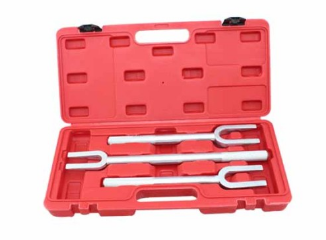
The pickle fork is one of the oldest and most well-known methods for separating ball joints. It’s a two-pronged, wedge-shaped tool that you insert between the ball joint and control arm and then strike with a hammer to force the joint apart.
Pros
✔ Inexpensive and simple
✔ Works when you’re replacing the joint anyway
Cons
✘ Often destroys the rubber boot covering the joint
✘ Can damage adjoining components
✘ Not suitable if you want to reuse parts
Many automotive forums and user discussions note that while pickle forks do get the job done, they almost inevitably tear the ball joint boot — which isn’t a problem if you’re replacing the joint but can be a setback if reuse is intended.
When to use:
✔ Only if the ball joint will be replaced entirely
✔ In situations where precision is not a priority
🔨 The Hammer Technique — Quick but Risky
Some technicians prefer to use a hammer alone or in combination with other tools to dislodge the ball joint. This method typically involves threading the nut back on the stud to protect it, then striking a heavy hammer against the joint or casting to shock the taper free.
Pros
✔ Requires no specialized tool
✔ Works in tight areas where other tools can’t fit
Cons
✘ High risk of damaging threads, boots, or nearby metal
✘ Requires skill to avoid collateral damage
✘ Less control over force and direction
A hammer can be effective when space is limited or you lack specialized tools, but the trade-off is often unpredictability and potential damage — especially on cast aluminum components that are more prone to cracking if struck incorrectly.
🔧 Ball Joint Press — The Professional Solution
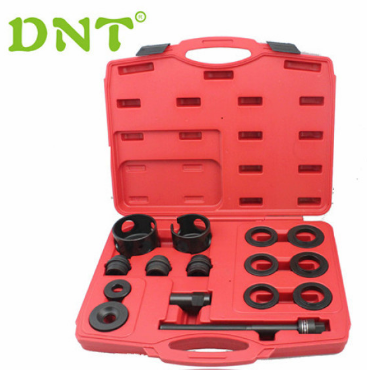
The ball joint press is a more professional and complete solution for separating (and often pressing out) ball joints. Unlike a separator or pickle fork, a press uses a set of adapters and a threaded forcing screw to push the joint out of its housing with controlled force.
Pros
✔ Ideal for heavy-duty applications
✔ Minimal risk of boot or component damage
✔ Works well on stubborn or rusted joints
Cons
✘ Higher cost than simple separators or forks
✘ Requires more space and setup time
Many technicians consider the press the most reliable method, especially when servicing multiple vehicles or in professional repair environments, since it combines safety with effectiveness even on tightly seized joints.
🆚 Comparison: Separator vs Pickle Fork vs Hammer vs Press
| Method | Ease of Use | Damage Risk | Reusability | Cost |
|---|---|---|---|---|
| Ball Joint Separator | Medium | Low | High | Moderate |
| Pickle Fork | Easy | High | Low | Low |
| Hammer Technique | Easy | High | Low | None |
| Ball Joint Press | Medium/Hard | Very Low | Very High | High |
Best for DIYers: Ball joint separators offer a great balance between cost, control, and part preservation.
Best for Parts Replacement: Pickle forks and hammer techniques work as a last resort when boots and joints are being replaced.
Best for Professionals: Ball joint press tools deliver consistent, repeatable results with minimal collateral damage.
🛠️ Why Choosing the Right Tool Matters
Using the proper tool for ball joint separation isn’t just about convenience — it can save you time, money, and prevent damage. Incorrect techniques like using a hammer or pickle fork recklessly may compromise suspension components, leading to additional repairs down the line.
That’s why investing in quality tools like ball joint separators and presses from DNT Tools matters.
🔧 Discover Quality Ball Joint Tools from DNT Tools
At DNT Tools, we specialize in precision automotive tools — including professional ball joint separators and press kits — engineered for durability, accuracy, and ease of use. Our products are trusted by mechanics, repair shops, fleet service providers, and DIY enthusiasts alike.
Why DNT Tools?
✔ Heavy-duty construction designed for workshop use
✔ Excellent fit and finish with corrosion-resistant materials
✔ Comprehensive range of tools for front and rear suspension work
✔ OEM/ODM customization options supported
Learn more about who we are and our commitment to quality on our About Us page.
🔚 Final Thoughts
When separating ball joints, the method you choose can greatly influence both the ease of the job and the condition of the surrounding components. For most users:
-
Ball Joint Separator: Great all-around choice with minimal damage
-
Pickle Fork: Works for full replacement but risks tearing boots
-
Hammer Method: Simple but unpredictable
-
Ball Joint Press: Professional, reliable, and gentle
Selecting the right approach — and the right tools — makes your suspension service safer and more efficient. With DNT Tools’ range of high-quality separators and presses, you’ll be well-equipped no matter the challenge.