How Hydraulic Pullers Generate Force
- Share
- Issue Time
- Jun 6,2026
How Hydraulic Pullers Generate Force
Hydraulic pullers generate powerful extraction force by converting hydraulic pressure into linear mechanical force. Compared with traditional mechanical pullers, hydraulic systems can remove large bearings, gears, pulleys, hubs, and other press-fit components with significantly less operator effort. This technology is widely used in heavy truck maintenance, industrial machinery repair, mining equipment service, and gearbox rebuilding applications.
The Advantage of Hydraulic Force
Hydraulic pullers use fluid pressure to multiply input force. A relatively small amount of manual or powered input can generate several tons of pulling capacity, allowing technicians to remove seized or heavily press-fitted components safely and efficiently.
The Basic Principle Behind Hydraulic Force
Hydraulic pullers operate according to Pascal's Law, which states that pressure applied to a confined fluid is transmitted equally throughout the hydraulic system. Because hydraulic oil is nearly incompressible, pressure generated by the pump can be converted into substantial force when applied to a larger piston surface inside the hydraulic cylinder.
Why Hydraulic Systems Are Effective
- High force multiplication capability
- Smooth and controlled operation
- Minimal operator effort
- Consistent pulling performance
Main Components Involved in Force Generation
Hydraulic Pump
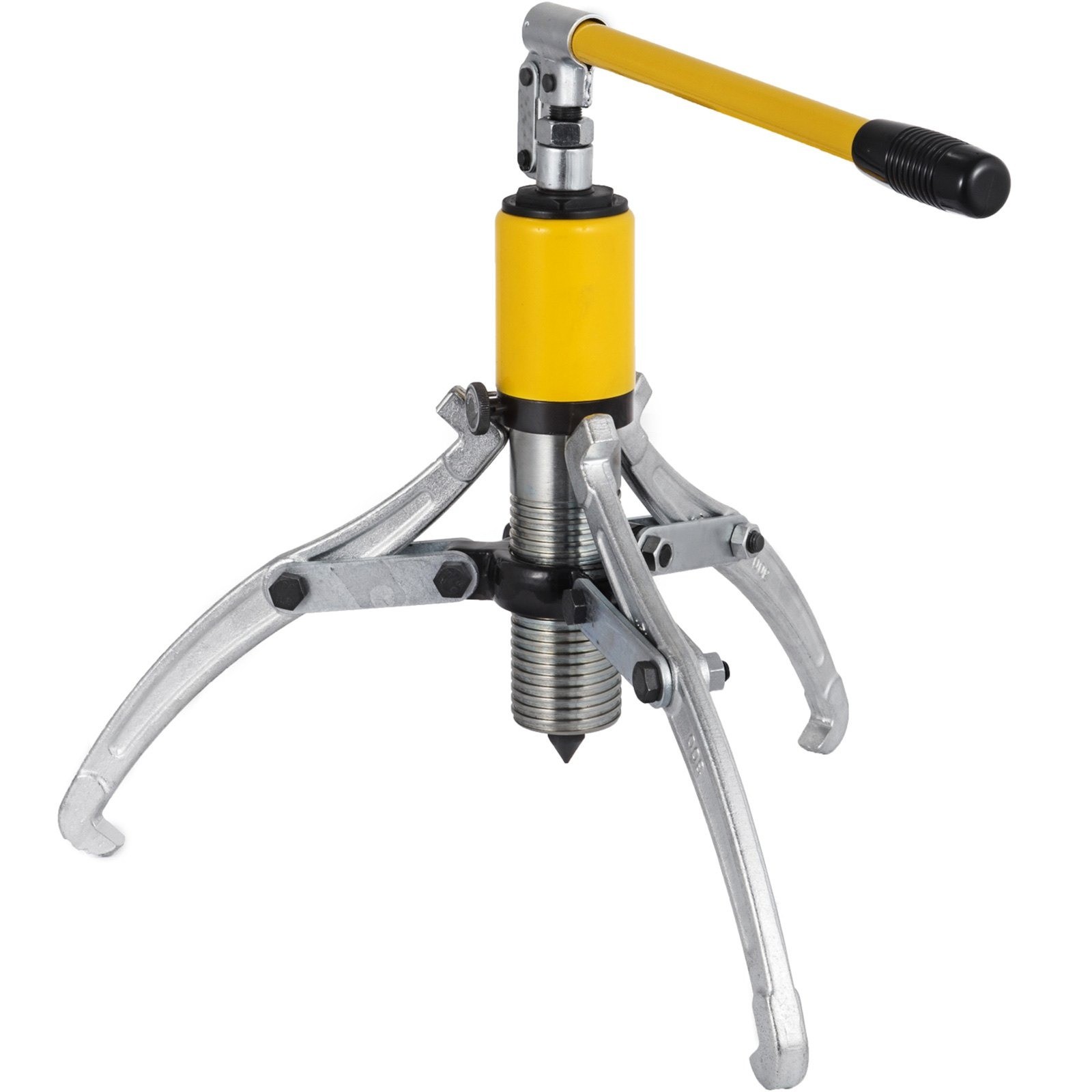
The hydraulic pump creates pressure within the system. Whether manually operated, pneumatic, or electric, the pump forces hydraulic oil into the cylinder, building pressure as resistance increases.
Hydraulic Cylinder or Ram
The hydraulic cylinder converts fluid pressure into mechanical force. As hydraulic oil enters the cylinder, the piston extends outward and generates powerful pushing force against the shaft center.
Puller Jaws
The puller jaws grip the bearing, gear, pulley, or hub securely. While the hydraulic ram pushes against the shaft, the jaws apply pulling force to the component being removed.
Cross Head or Yoke
The cross head connects the jaws and hydraulic cylinder while distributing force evenly across the puller assembly. This helps maintain stability during extraction.
Hydraulic Force Generation System
The hydraulic pump, cylinder, puller jaws, and cross head work together as an integrated system. Hydraulic pressure creates piston movement, which becomes extraction force that separates the component from its mounting position.
Step-by-Step Force Generation Process
Step 1: Positioning the Puller
The puller jaws are placed securely behind the bearing or gear. Proper positioning ensures balanced force distribution throughout the extraction process.
Step 2: Building Hydraulic Pressure
The operator activates the hydraulic pump. Hydraulic oil is forced into the cylinder, increasing internal pressure.
Step 3: Cylinder Extension
As pressure builds, the hydraulic piston extends outward. The ram applies direct force against the shaft center.
Step 4: Force Multiplication
The hydraulic system amplifies the operator's input force. Even a small pumping effort can generate several tons of extraction force through hydraulic pressure.
Step 5: Component Extraction
The hydraulic ram pushes against the shaft while the jaws pull on the component. The bearing, gear, or pulley gradually separates from its mounting position in a controlled manner.
Why Hydraulic Pullers Produce More Force Than Mechanical Pullers
Mechanical pullers rely on threaded forcing screws and manual torque. As extraction loads increase, significantly more physical effort is required. Hydraulic pullers eliminate this limitation by using fluid pressure to create force, allowing operators to remove larger and more stubborn components with less effort and greater control.
| Feature | Hydraulic Puller | Mechanical Puller |
|---|---|---|
| Force Generation | Hydraulic pressure | Manual screw force |
| Pulling Capacity | Very high | Moderate |
| Operator Effort | Low | Higher |
| Best Applications | Heavy-duty and industrial repair | General maintenance |
Typical Pulling Capacities
Hydraulic pullers are available in various force ratings depending on the application and component size.
| Capacity | Typical Application |
|---|---|
| 5 Ton | Passenger vehicle bearings and pulleys |
| 10 Ton | Light commercial vehicles |
| 20 Ton | Heavy truck maintenance |
| 30 Ton | Industrial equipment repair |
| 50 Ton+ | Mining and heavy industrial machinery |
Advantages of Hydraulic Force Generation
High Pulling Power
Hydraulic systems generate significantly greater extraction force than traditional mechanical pullers.
Reduced Operator Fatigue
The hydraulic system performs most of the work, minimizing physical effort during extraction.
Smooth Force Application
Gradual pressure buildup reduces shock loads and lowers the risk of component damage.
Improved Safety
Controlled hydraulic force provides more predictable extraction and reduces the likelihood of sudden component release.
Common Applications
Hydraulic pullers are commonly used for wheel hub bearings, transmission bearings, differential gears, industrial motors, mining equipment, agricultural machinery, heavy truck drivetrains, and large gearbox overhaul operations.
Summary
Hydraulic pullers generate force by converting hydraulic pressure into powerful linear motion through a hydraulic cylinder. By multiplying input force through hydraulic technology, these tools deliver high pulling capacity, improved safety, and exceptional efficiency when removing bearings, gears, pulleys, and other press-fit components in demanding maintenance environments.