- Ningbo Dongning Tools Co.,Ltd
- Professional Chinese Tools manufacturer on automotive speciality tools,bearing puller&heavy truck tools
- Address
- No.6 Falan Rd,Hengjie Town,Ningbo City,Zhejiang,China
- Phone
- +86-574-87216625
- info@nbdntools.com

When evaluating the quality of a bearing puller, one of the most important manufacturing differences is whether the tool is forged or cast. While both production methods can create puller components, the resulting mechanical properties, durability, and long-term performance differ significantly. For professional workshops, heavy truck maintenance facilities, and industrial applications, understanding the difference between forged and cast pullers is essential for selecting the right tool.
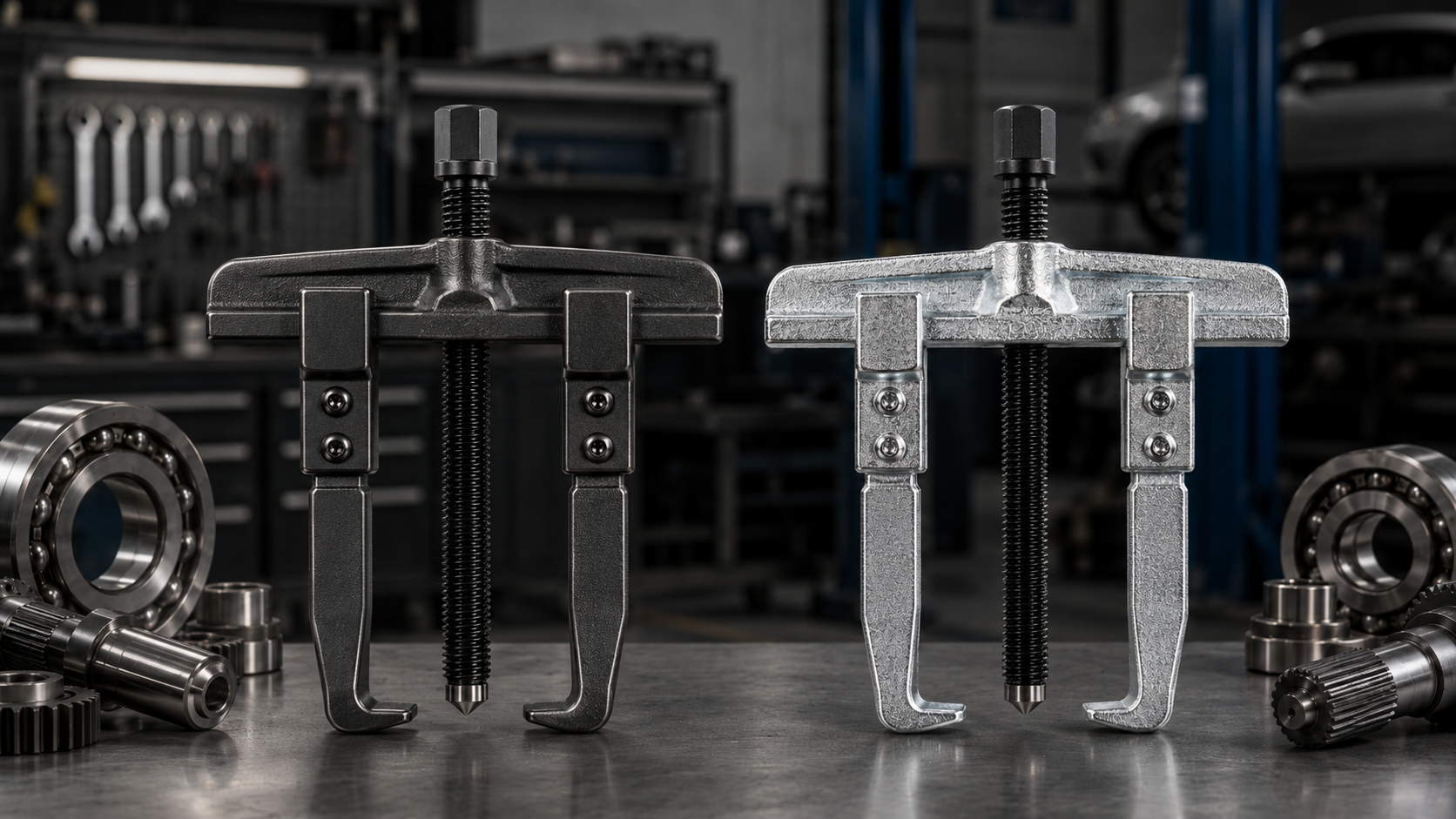
The manufacturing process affects grain structure, strength, fatigue resistance, and defect levels inside the metal. These factors directly influence how a puller performs under heavy extraction loads and repeated use.
A forged bearing puller is manufactured by shaping solid steel under high compressive force. During the forging process, the steel is pressed or hammered into shape while remaining in a solid state. This process refines the grain flow of the material and increases its mechanical strength.
One of the key advantages of forging is the continuous grain flow created during deformation. The grain structure follows the shape of the component, resulting in improved strength and resistance to cracking compared with cast components.
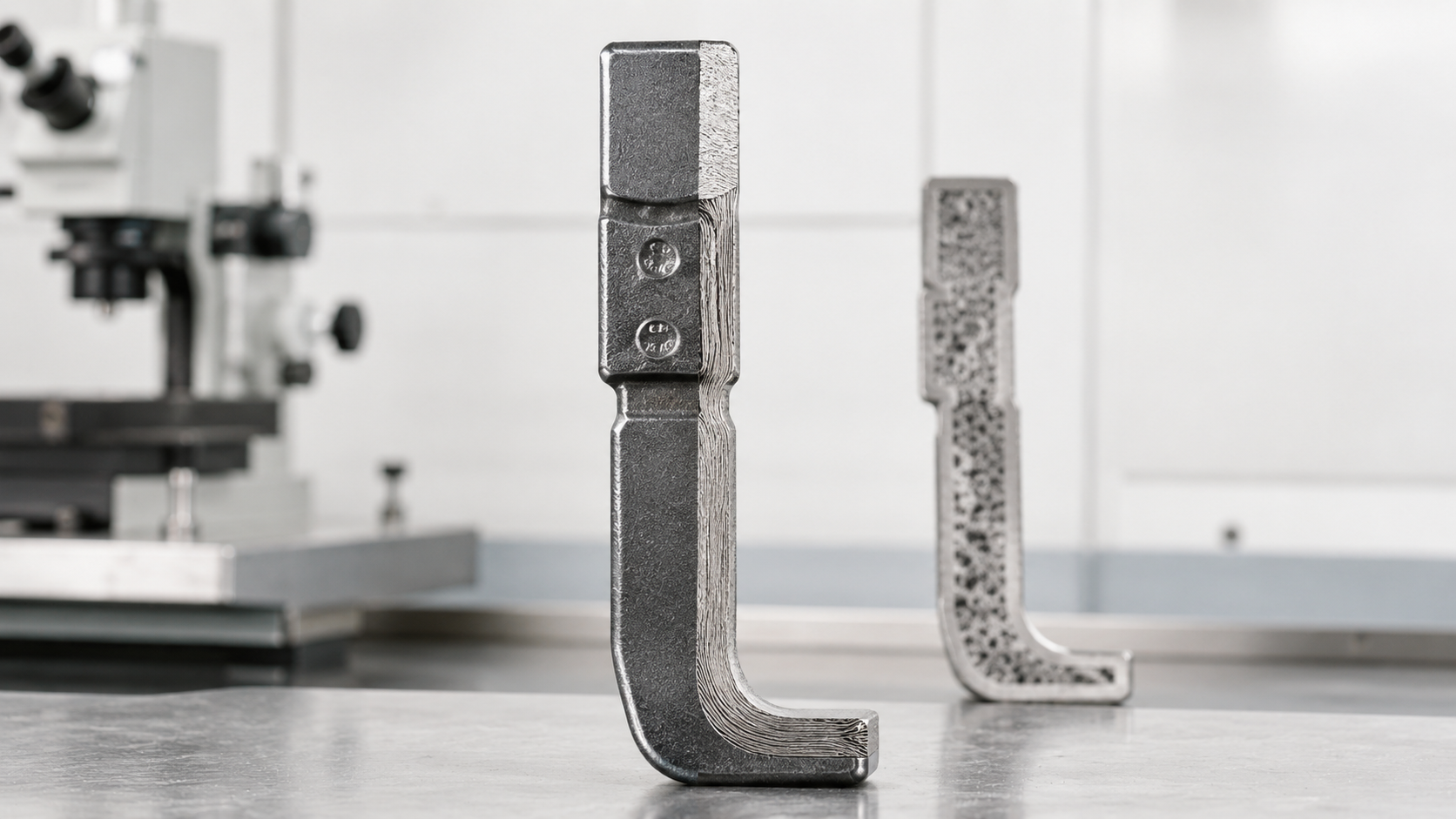
A cast bearing puller is produced by melting metal and pouring it into a mold where it solidifies into the desired shape. Casting allows manufacturers to create complex geometries and reduce production costs, but the resulting grain structure is more random compared with forged steel.
Pullers operate under extremely high extraction loads. During bearing removal, forces are concentrated on the jaws, forcing screw, and cross beam. Forged steel components generally provide higher tensile strength and yield strength, making them better suited for demanding extraction tasks.
Professional pullers are repeatedly loaded and unloaded during maintenance operations. Fatigue resistance becomes critical because microscopic cracks can develop over time. The refined grain structure of forged steel helps resist fatigue damage and significantly extends tool lifespan.
Industrial and heavy-duty pullers may perform thousands of extraction cycles throughout their service life. Forged components typically maintain their structural integrity longer, reducing the likelihood of unexpected failures.
Forging compresses the metal and helps eliminate internal voids, resulting in a denser structure. Casting, on the other hand, may introduce porosity, shrinkage cavities, or inclusions during solidification. These defects can become stress concentration points under heavy loads.
Seized bearings and gears can create sudden shock loads during extraction. Forged steel generally offers superior impact resistance and toughness, allowing it to absorb energy without cracking. This makes forged pullers more reliable in demanding workshop environments.
| Feature | Forged Pullers | Cast Pullers |
|---|---|---|
| Strength | Excellent | Moderate |
| Fatigue Resistance | High | Lower |
| Impact Resistance | Excellent | Limited |
| Internal Defects | Minimal | Possible Porosity |
| Service Life | Long | Shorter |
| Manufacturing Cost | Higher | Lower |
For professional mechanics, fleet maintenance facilities, and industrial users, forged bearing pullers are generally the preferred choice. Their superior strength, fatigue resistance, toughness, and long-term durability make them more reliable when handling difficult bearing extraction tasks and heavy-duty workloads.
Both forged and cast bearing pullers can perform extraction tasks, but forged pullers offer significant advantages in strength, fatigue resistance, impact performance, and service life. While cast pullers may provide a lower-cost solution for light-duty applications, forged pullers remain the preferred option for demanding automotive, heavy truck, and industrial maintenance environments where reliability and safety are critical.