How Bearing Pullers Work: The Mechanism Explained
How Bearing Pullers Work: The Mechanism Explained
A bearing puller is a specialized tool used to remove bearings, gears, pulleys, and other press-fit components from shafts or housings without damaging the surrounding structures. Unlike improvised methods that involve hammering or prying, bearing pullers apply controlled mechanical force to extract parts safely and efficiently.
Core Components of a Bearing Puller
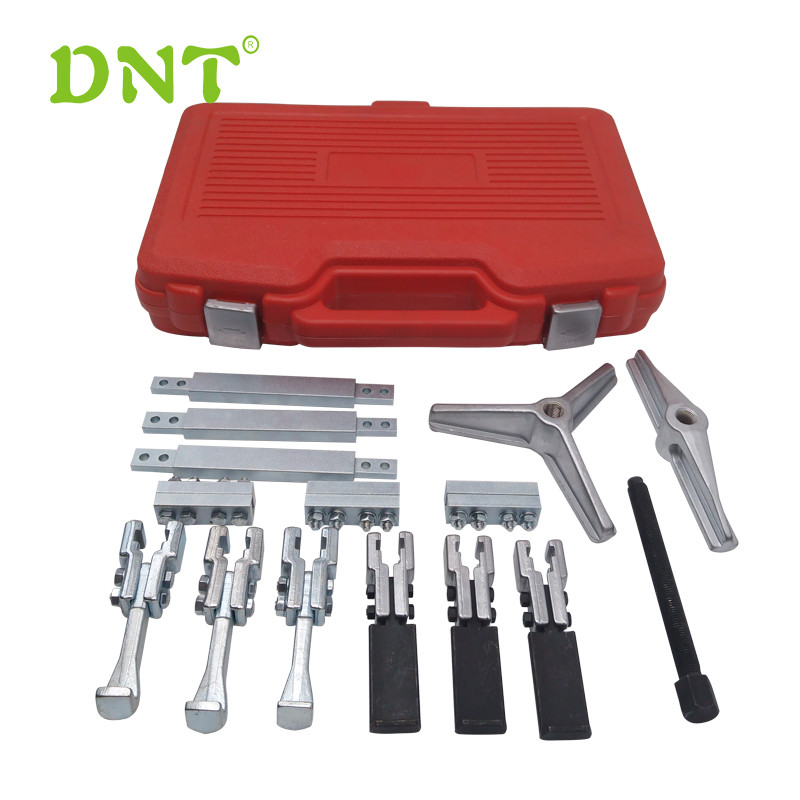
Most bearing pullers consist of a central forcing screw and a set of jaws or arms. The arms grip the component (either from the outside or inside), while the forcing screw applies progressive pulling force as it is turned or actuated.
How the Mechanism Works
1. Gripping the Component
To begin, the puller’s jaws are positioned either around the outer diameter of the bearing (external puller) or within the inner diameter (internal or blind puller) depending on accessibility. External pullers grip the outside of the part, while internal models expand behind the bearing to grip it.
2. Applying Force
Once the jaws are in place, the central forcing screw is tightened. As the screw is turned, it pushes against the shaft or housing and pulls the bearing or component outward. This controlled force extraction avoids damage to shafts, housings, and nearby parts.
3. Types of Force Application
The pulling force can be generated in different ways:
- Manual pullers — the screw is turned by hand using a wrench.
- Hydraulic pullers — use a hand pump or hydraulic cylinder for higher pulling power and smoother operation, ideal for larger or seized bearings. :contentReference[oaicite:4]{index=4}
- Pneumatic pullers — use compressed air to generate force for industrial speed and consistency.
Common Bearing Puller Types
Different bearing pullers are designed for specific applications:
- External pullers — ideal for bearings mounted on shafts where the outer ring is accessible.
- Internal or blind pullers — used when bearings are recessed inside housings and cannot be gripped from outside.
- Reversible pullers — adaptable to both internal and external removal tasks.
Why the Mechanism Matters
Bearing pullers provide a controlled and secure method for removing tight-fit parts without risking damage to the shaft, housing, or surrounding components — a common issue with hammering or improvised removal techniques. They also help reduce machine downtime and improve maintenance efficiency.
About DNT Tools – Precision Bearing Pullers & More
Founded over 25 years ago, DNT Tools (Dongning Tools, Ningbo, China) is a leading manufacturer of high-quality automotive and industrial hand tools — including bearing pullers, extractors, and specialized maintenance equipment. Our products are engineered for durability, precision, and ease of use in demanding environments. Learn more about our brand and capabilities.
DNT Tools bearing Puller Features
- Robust construction designed to withstand high extraction forces.
- Multiple jaw configurations for external and internal removal.
- Wide size range to suit various bearing diameters.
- Available in manual and hydraulically assisted models.
Whether you’re working on automotive repairs, industrial machinery, or workshop maintenance, high-quality bearing pullers from DNT Tools provide reliable and efficient solutions for extracting tough press-fit components.