
- Ningbo Dongning Tools Co.,Ltd
- Professional Chinese Tools manufacturer on automotive speciality tools,bearing puller&heavy truck tools
- Address
- No.6 Falan Rd,Hengjie Town,Ningbo City,Zhejiang,China
- Phone
- +86-574-87216625
- info@nbdntools.com

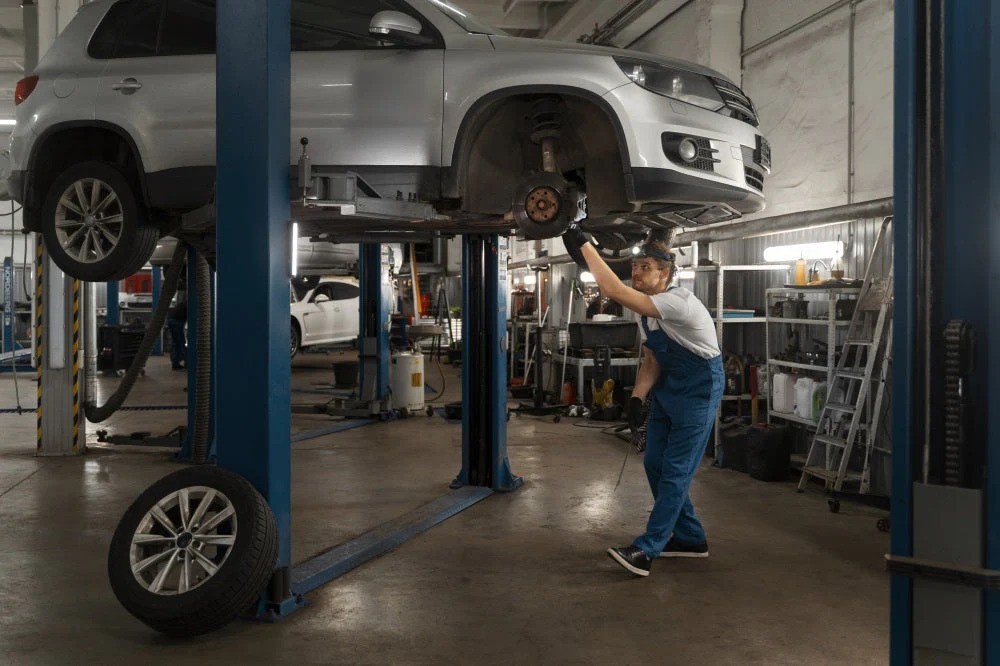
Automotive specialty tools are designed to perform specific repair tasks quickly and accurately. Unlike general tools, they are engineered to match vehicle components and service procedures, allowing technicians to complete repairs with less effort and reduced risk of error. This targeted design plays a key role in improving overall workshop efficiency.
Specialty diagnostic tools such as OBD scanners and electronic testing devices enable technicians to identify issues quickly. Instead of relying on trial-and-error methods, these tools provide real-time data and precise fault codes, reducing troubleshooting time and helping mechanics move directly to the correct repair solution.
Tools designed for specific tasks, such as bearing pullers or brake service tools, allow mechanics to complete jobs faster compared to using general-purpose tools. These tools eliminate unnecessary steps and simplify complex procedures, significantly reducing repair cycle time and increasing workshop productivity.
Specialty tools are built to meet exact technical requirements, ensuring precise alignment, torque control, and component handling. This level of accuracy reduces the likelihood of mistakes, prevents rework, and ensures repairs are completed correctly the first time.
Many automotive components are located in confined spaces where standard tools cannot easily reach. Specialty tools are often compact or uniquely shaped to access these areas, allowing technicians to perform repairs without disassembling additional parts.
Using the correct tool reduces the risk of accidents and component damage. Specialty tools are designed with safety features and controlled force application, helping mechanics avoid injuries and ensuring that vehicle parts are not damaged during service.
With the right specialty tools, technicians can follow standardized repair procedures instead of experimenting with different methods. This minimizes guesswork, reduces wasted time, and improves consistency in repair results.
By combining faster diagnostics, reduced repair time, and improved accuracy, specialty tools help workshops handle more jobs in less time. Increased efficiency allows service centers to improve workflow, reduce downtime, and enhance customer satisfaction.
Automotive specialty tools improve repair efficiency by enabling faster diagnostics, reducing repair time, increasing accuracy, improving access to complex components, and enhancing safety. These advantages make them essential for modern workshops aiming to deliver high-quality, efficient vehicle service.