- Ningbo Dongning Tools Co.,Ltd
- Professional Chinese Tools manufacturer on automotive speciality tools,bearing puller&heavy truck tools
- Address
- No.6 Falan Rd,Hengjie Town,Ningbo City,Zhejiang,China
- Phone
- +86-574-87216625
- info@nbdntools.com

A 2 jaw puller is a specialized extraction tool used to remove bearings, gears, pulleys, hubs, and other press-fit components from shafts. The tool uses two adjustable jaws together with a center forcing screw or hydraulic ram to apply controlled pulling force. Because of its compact structure and flexible jaw positioning, a 2 jaw puller is widely used in automotive repair, gearbox maintenance, heavy truck service, and industrial machinery repair.
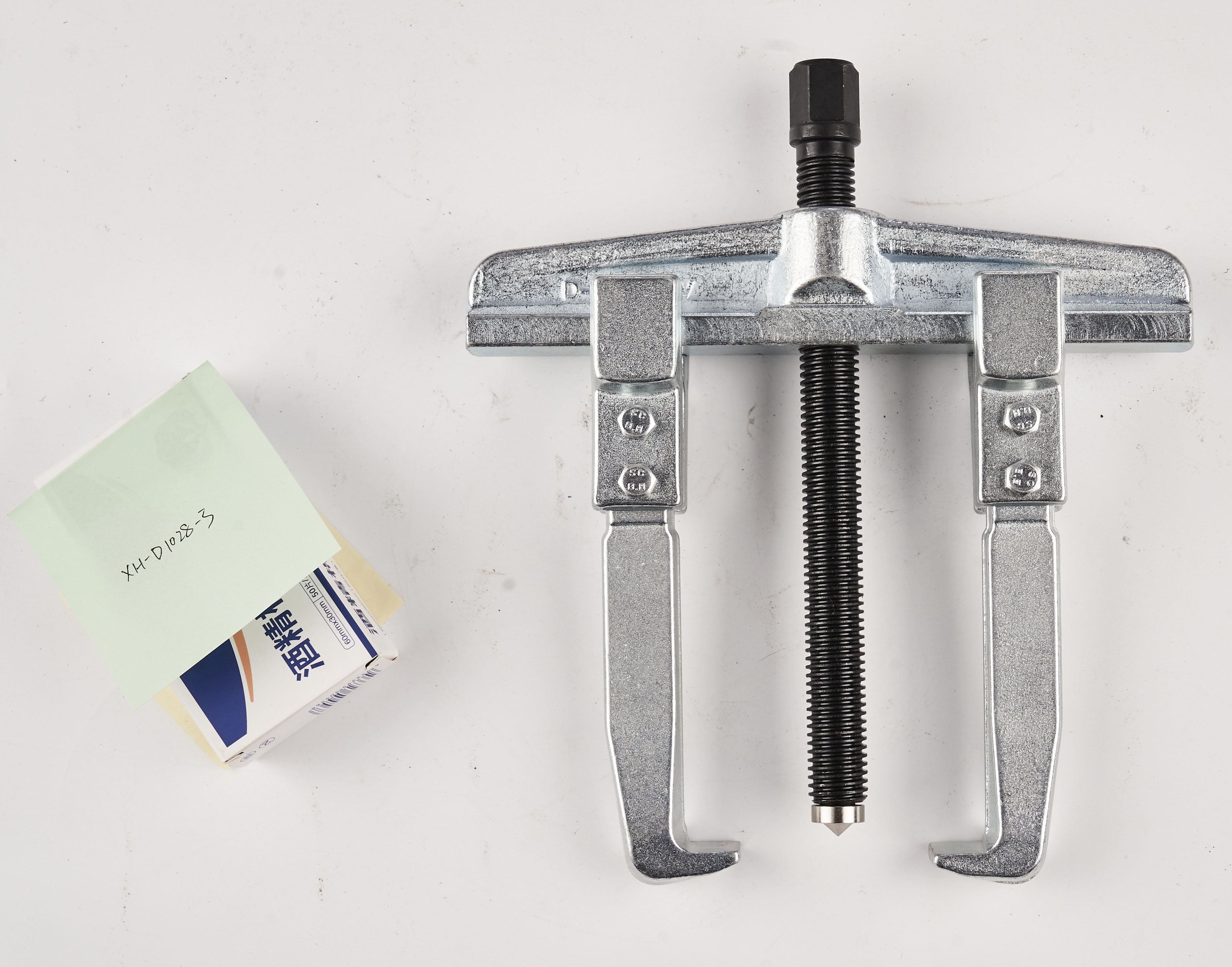
Many automotive and industrial assemblies have limited surrounding space, making it difficult to use larger pullers. A 2 jaw puller requires less operating clearance than a 3 jaw puller, allowing technicians to work efficiently in compact repair areas. The adjustable jaws also make positioning easier when removing gears or bearings from narrow assemblies.
A 2 jaw puller works by converting tightening force into pulling force. The jaws are positioned behind the component while the forcing screw presses against the shaft center. As the screw is tightened, the jaws gradually pull the bearing, gear, or pulley away from the shaft in a controlled manner. Hydraulic versions use hydraulic pressure instead of manual force to achieve higher pulling capacity.
First, the jaws are adjusted according to the size of the component. Second, the puller is positioned securely behind the bearing or gear. Third, the forcing screw or hydraulic ram is aligned with the shaft center. Finally, force is applied gradually until the component is removed safely from the shaft.
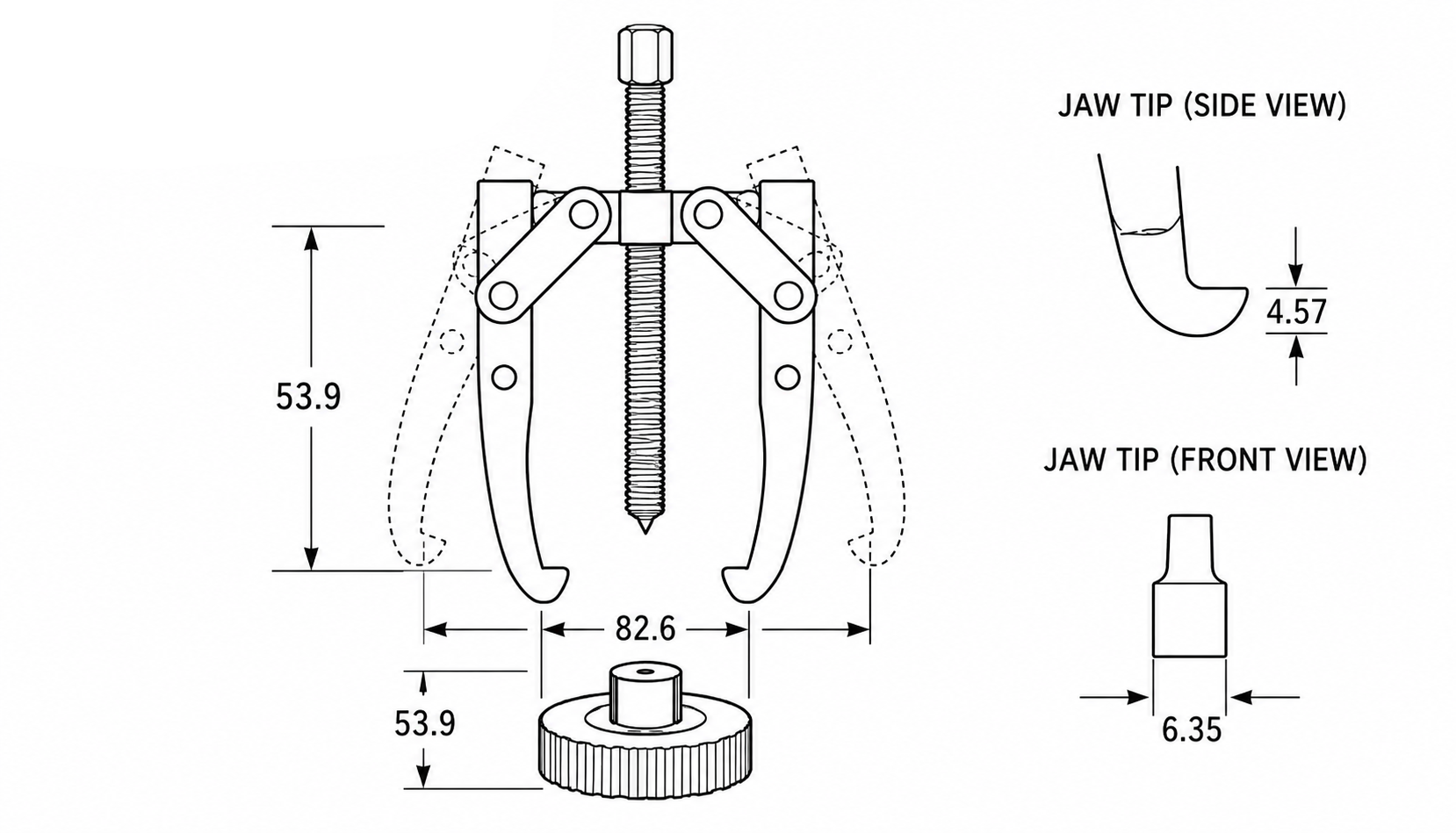
The two adjustable jaws grip the component securely during extraction. Their position can be changed according to the size and shape of the bearing or gear.
The forcing screw generates extraction force by pushing against the shaft center while the jaws pull the component outward.
The cross beam supports the jaws and helps distribute pulling force evenly during operation.
Hydraulic versions include a hydraulic ram or cylinder that provides greater pulling capacity for heavy-duty applications.
Mechanical pullers use manual screw force and are commonly used in automotive workshops for standard repair operations.
Hydraulic pullers use hydraulic pressure to remove large or seized components in heavy-duty repair environments.
Some pullers feature reversible jaws that allow the tool to perform both internal and external pulling operations.
2 jaw pullers are widely used for removing wheel bearings, transmission gears, pulleys, timing gears, harmonic balancers, and industrial machine components. They are commonly found in automotive workshops, heavy truck repair centers, gearbox rebuilding facilities, and industrial maintenance operations.
The two-jaw structure allows efficient operation in tight spaces where larger pullers may not fit properly.
The simple jaw arrangement makes setup faster and improves accessibility during repair tasks.
2 jaw pullers can be used across automotive, industrial, agricultural, and heavy-duty repair applications.
Controlled extraction force helps protect shafts, housings, and surrounding components during removal operations.
| Feature | 2 Jaw Puller | 3 Jaw Puller |
|---|---|---|
| Working Space Requirement | Smaller | Larger |
| Force Distribution | Two-point contact | More balanced three-point contact |
| Typical Applications | Compact assemblies and tight spaces | Larger gears and bearings |
| Setup Speed | Fast | More stable during pulling |
A 2 jaw puller is a compact and versatile extraction tool used for removing bearings, gears, pulleys, and other press-fit components safely and efficiently. Its compact structure, flexible positioning capability, and controlled pulling force make it an essential tool for automotive, heavy-duty, and industrial repair applications.