
- Ningbo Dongning Tools Co.,Ltd
- Professional Chinese Tools manufacturer on automotive speciality tools,bearing puller&heavy truck tools
- Address
- No.6 Falan Rd,Hengjie Town,Ningbo City,Zhejiang,China
- Phone
- +86-574-87216625
- info@nbdntools.com

The material used to manufacture a puller directly affects its strength, durability, wear resistance, fatigue life, and overall performance. Whether the tool is a bearing puller, gear puller, hydraulic puller, or bearing separator, choosing the right material is essential for ensuring reliable operation under high extraction loads. Modern pullers are commonly made from carbon steel, alloy steel, chrome vanadium steel, chrome molybdenum steel, and specialized tool steels. Each material offers unique advantages depending on the intended application and working environment.
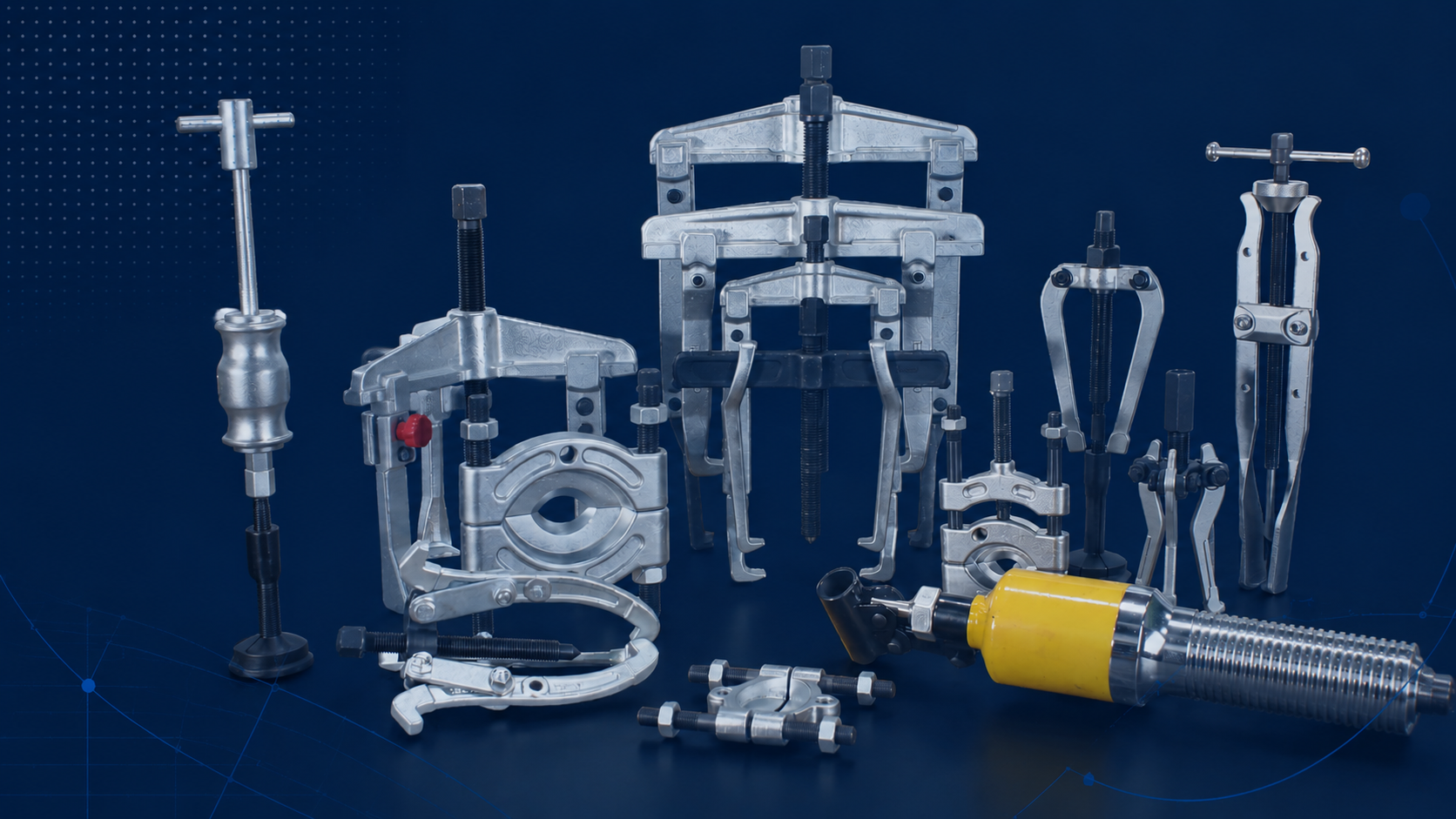
During extraction, pullers are subjected to high tensile loads, impact forces, and repeated stress cycles. The quality and type of steel determine whether the tool can resist deformation, wear, fatigue, and potential failure during demanding maintenance operations.
Carbon steel is one of the most commonly used materials for entry-level and general-purpose pullers. It contains primarily iron and carbon, making it economical and easy to manufacture.
45# steel is widely used in machinery manufacturing and standard puller production. It offers a good balance between strength, toughness, and cost, especially after proper heat treatment.
45# steel remains popular because it delivers reliable mechanical properties at a reasonable manufacturing cost, making it suitable for medium-duty maintenance environments.
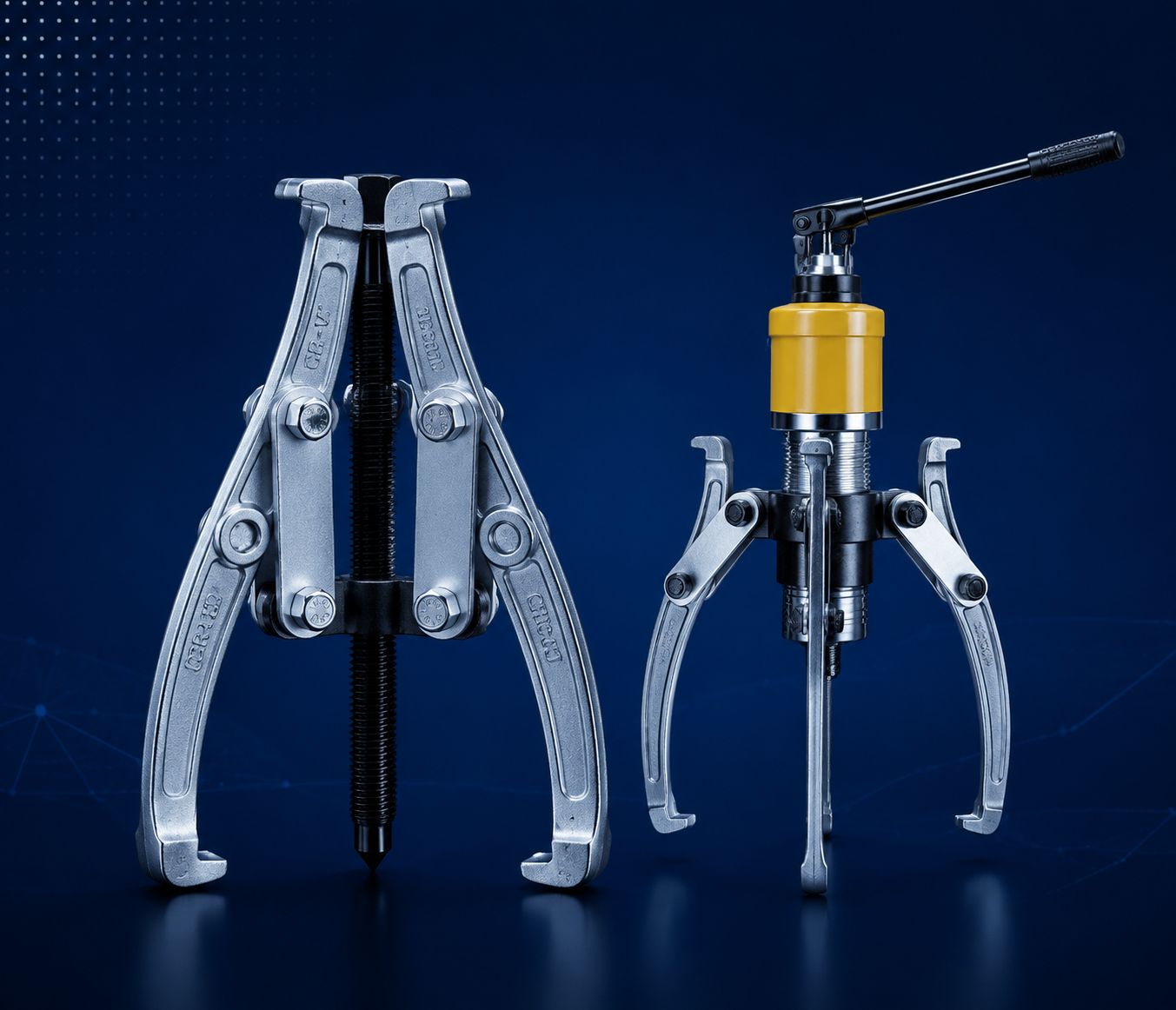
40Cr is one of the most commonly used alloy steels in professional puller manufacturing. The addition of chromium improves hardenability, strength, toughness, and wear resistance compared with standard carbon steel.
42CrMo is a premium chromium-molybdenum alloy steel known for its exceptional strength and toughness. It is widely used in heavy-duty pullers and industrial extraction systems where reliability is critical.
Chrome vanadium steel is widely used in premium hand tools because of its excellent combination of strength, hardness, and wear resistance.
Cr-V steel performs exceptionally well in professional workshops where tools are subjected to frequent loading cycles and continuous daily use.
Chrome molybdenum steel is engineered for high-load applications and demanding working conditions. It provides exceptional toughness, fatigue resistance, and impact strength.
Tool steels are specialized materials developed for tooling applications. They offer exceptional hardness, wear resistance, and dimensional stability, making them ideal for high-performance components.
Stainless steel is less common in heavy-duty pullers but may be used in environments where corrosion resistance is more important than maximum strength.
| Material | Strength | Wear Resistance | Typical Application |
|---|---|---|---|
| Carbon Steel | Good | Moderate | General repair tools |
| 45# Steel | Good | Moderate | Standard pullers |
| 40Cr | High | High | Professional pullers |
| 42CrMo | Very High | Excellent | Heavy-duty pullers |
| Cr-V | High | Excellent | Premium hand pullers |
| Cr-Mo | Very High | Excellent | Hydraulic pullers |
| Tool Steel | Very High | Outstanding | Precision tooling |
| Stainless Steel | Moderate | Good | Corrosive environments |
The best material depends on the intended application. Carbon steel and 45# steel are suitable for light-duty and budget-oriented tools. For professional workshops, 40Cr and 42CrMo provide the best balance of strength, toughness, and durability. Hydraulic pullers and industrial extraction systems typically benefit most from Cr-Mo and 42CrMo materials because of their superior load-bearing capabilities.
Material selection is one of the most important factors affecting puller performance. While carbon steel remains a cost-effective choice for general maintenance, professional-grade pullers typically rely on alloy steels such as 40Cr, 42CrMo, Cr-V, and Cr-Mo to deliver the strength, wear resistance, fatigue life, and long-term reliability required for demanding automotive, heavy truck, and industrial maintenance applications.